
America’s debate about capitalism is becoming increasingly polarized. We’re often presented with what sounds like a binary choice: defend the system we have or reject it for something fundamentally different.
I believe there is another choice—and it has been hiding in plain sight.
Cooperatives and other shared ownership models preserve the power of markets, entrepreneurship and private enterprise while broadening who participates in ownership and who benefits when those enterprises succeed. This isn’t a theoretical economic model. Millions of people already experience it every day as members, employees, producers, business owners and consumers.
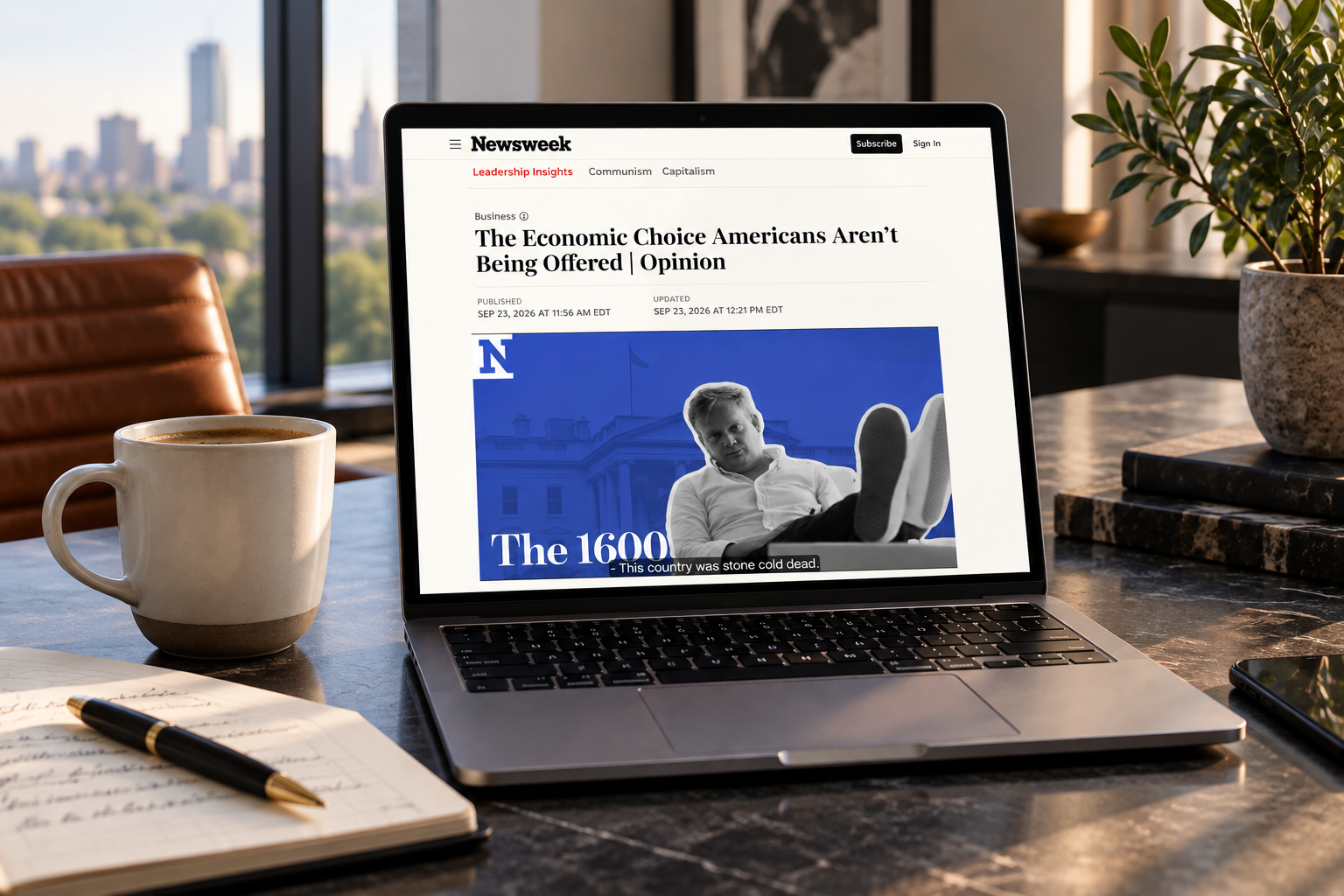
That is the argument I recently made in Newsweek. I’m sharing the article here as part of The Cooperative Lens because I believe this is a conversation the cooperative community should be helping to lead.
And I’d like to hear what you think: Have we allowed the debate about our economic future to become a false choice between capitalism and its alternatives? What could change if shared ownership became a much larger part of the conversation?
I hope you’ll read the piece and join the discussion.

The Economic Choice Americans Aren’t Being Offered
by Howard Brodsky
America’s argument over capitalism is getting louder just as confidence in the system is weakening.
In 2025, Gallup found that only 54 percent of Americans viewed capitalism positively, the lowest level Gallup has recorded.
Yet socialism was hardly winning the argument, with just 39 percent viewing it positively. The numbers suggest something more important than an ideological shift: many Americans are dissatisfied with the choices they are being offered.
We keep presenting the economic future as a contest between two opposing ideas. Either defend capitalism as it exists or expand the government’s role in distributing economic security in a more socialist model.
That is a false choice. We can preserve entrepreneurship, competition and private enterprise while expanding the number of people who actually share in the wealth those forces create.
The Problem of Ownership
Capitalism has produced extraordinary innovation, businesses and economic growth for America. Tearing it down would sacrifice precisely the incentives that make entrepreneurship possible.
But defending the system cannot mean pretending its benefits are reaching enough people.
When people work within a growing economy yet remain unable to build meaningful financial security, frustration with the system itself becomes inevitable.
The problem, therefore, is not capitalism. It is ownership.
Too often, people contribute their labor to successful enterprises without gaining a meaningful stake in the value being created.
A stronger model would broaden ownership through structures that allow employees, members, producers, or other participants to share more directly in economic success. This is not government ownership. It is private enterprise with more owners.
Nor is this some small-scale economic experiment.
The International Cooperative Alliance says at least 12 percent of the world’s population participates in cooperatives, while the 300 largest cooperatives and mutuals generated $2.79 trillion in combined turnover in 2023.
Whatever terminology we use, the figures demonstrate that cooperative and member-owned enterprises can operate at enormous scale.
The Opportunity to Build Wealth
That matters because ownership changes the economic equation. Wages help people meet today’s expenses. Ownership gives them an opportunity to participate in tomorrow’s value.
When more people accumulate assets and share in business success, economic growth becomes something they experience personally rather than something they merely read about in national statistics.
The alternative is a dangerous cycle. If ownership continues concentrating while millions feel excluded from economic progress, dissatisfaction with capitalism will deepen.
Political leaders will keep offering increasingly polarized answers, and voters will be pushed toward arguments about whether the government should do dramatically more or dramatically less.
Meanwhile, the more practical question will remain unanswered: Why not give more people the opportunity to build wealth through the market itself?
Better Capitalism Means More Participation
Broader ownership also offers something government assistance cannot provide on its own: participation.
Safety nets are necessary when people face hardship, but the long-term ambition of economic policy should be to create more pathways toward independence.
People should have opportunities not simply to receive support when the economy fails them, but to participate in the upside when it succeeds.
That is capitalism with a conscience, but it is also capitalism with a stronger constituency. An economic system becomes more durable when more people have a tangible reason to believe in its success.
Business leaders, investors and policymakers should therefore make broad ownership a measurable part of economic decision-making.
Large employers should annually disclose what percentage of company equity, profit-sharing or comparable ownership benefits reaches non-executive workers.
Boards and investors should then evaluate that figure alongside traditional measures of growth, compensation and shareholder returns.
Policymakers should remove financing and tax barriers that unnecessarily disadvantage broad-ownership structures.
The next economic debate should not ask Americans to choose between preserving capitalism and abandoning it. We should ask how many more people can become participants in it.
Capitalism does not need fewer winners. It needs more owners.
Originally published in Newsweek, September 23, 2026.
To read the original article on Newsweek click here.
0 Comments